Filed 9 July 2012, 12:39 IST. Every price, volume and forecast below is reproduced as published on that date and is not a current quotation. For how the benchmarks themselves are set, see how gold is priced.
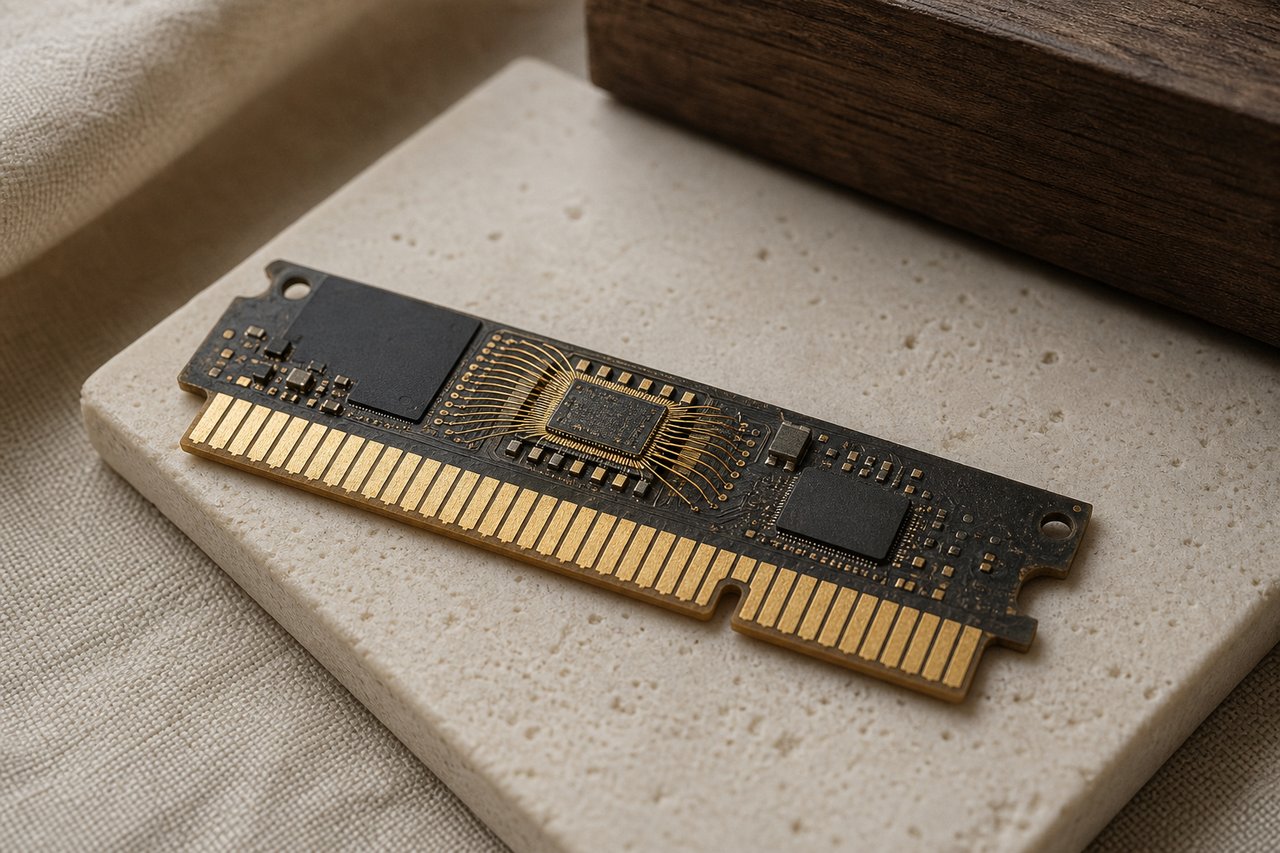
Around 320 tonnes of gold and more than 7,500 tonnes of silver were being used annually to manufacture computers, mobile phones, tablets and other electronic and electrical products worldwide. Barely fifteen per cent of those precious metals was being recovered from the resulting waste stream, and United Nations University researchers put the value of the unrecovered material at roughly $21 billion a year, about $16 billion in gold and $5 billion in silver.
These are quantities rather than forecasts, which is why they have outlasted every price call in the file. A tonnage consumed in a given year stays true; a view on where the price was heading does not.
Why electronics use precious metals at all
Conductivity and corrosion resistance. Silver is the most electrically conductive element, and gold does not oxidise, so a gold-plated contact continues to carry current reliably for decades where a base-metal one degrades. In a connector, a switch or a bond wire the quantity involved is minute and the consequence of failure is total, which is why the substitution economics almost always favour the precious metal despite the cost.
The archive's own framing is worth keeping: electronic and electrical products consumed 5.3 per cent of world gold supply in 2001, about 197 tonnes, and 7.7 per cent by the year before this dispatch, at 320 tonnes. The share and the absolute figure both rose, driven by unit volumes rather than by more metal per device.
The recovery problem
The asymmetry between the two metals is the substance of the story. Gold in electronics is concentrated in identifiable high-value components, so recovery is economic and a real refining industry exists to do it. Silver is dispersed in tiny quantities across contacts, pastes and printed circuits, and in photovoltaic cells it is fired into the cell itself, so recovering it costs more than the metal is worth in most waste streams, and it is simply lost.
That is why silver's industrial demand supports its price more directly than gold's supports gold. Gold consumed in electronics largely returns to the market eventually; silver consumed in electronics mostly does not. The four destinations of annual gold demand are set side by side, with each band's source named, in the graphic on the archive homepage.
Urban mining
The $21 billion estimate is what gave the dispatch its reach: it reframes a waste-management problem as an unexploited resource with a grade far higher than any ore body. A tonne of mixed circuit boards contains vastly more gold than a tonne of rock from a working mine. What it also contains is a collection problem, a labour-safety problem and a hazardous-materials problem, which is why the recovery rate was fifteen per cent rather than ninety.
For the industrial and medical side of silver more broadly, see the silver section.
Questions about this dispatch
How much gold and silver does the electronics industry use each year?
As reported here for the year before this dispatch: around 320 tonnes of gold and more than 7,500 tonnes of silver annually, across computers, mobile phones, tablets and other electronic and electrical products. Gold's share of world supply in this use had risen from 5.3 per cent in 2001 to 7.7 per cent.
Why is so little of it recovered?
Because recovery economics differ sharply between the two metals. Gold sits in identifiable high-value components and is worth extracting. Silver is dispersed in tiny quantities across contacts, conductive pastes and photovoltaic cells, where the cost of recovery exceeds the value of the metal, so most of it is lost. Overall recovery stood at roughly fifteen per cent.
What is "urban mining"?
Recovering metals from discarded products rather than from ore. The attraction is grade: a tonne of mixed circuit boards contains far more gold than a tonne of rock from a working mine. The obstacles are collection, labour safety and hazardous materials, which is why the recovery rate stayed low despite an estimated $21 billion a year of gold and silver going unrecovered.
This page restores an item first published on 9 July 2012, 12:39 IST at the address below. Cite the publication date rather than the date you read it: the material is a 2011 to 2016 document, and the date is what makes it meaningful.
https://www.bullionstreet.com/news/electronics-industry-uses-320-tons-of-gold7500-tons-of-silver-annually/2255