Filed 14 May 2012, 11:53 IST. Every price, volume and forecast below is reproduced as published on that date and is not a current quotation. For how the benchmarks themselves are set, see how gold is priced.
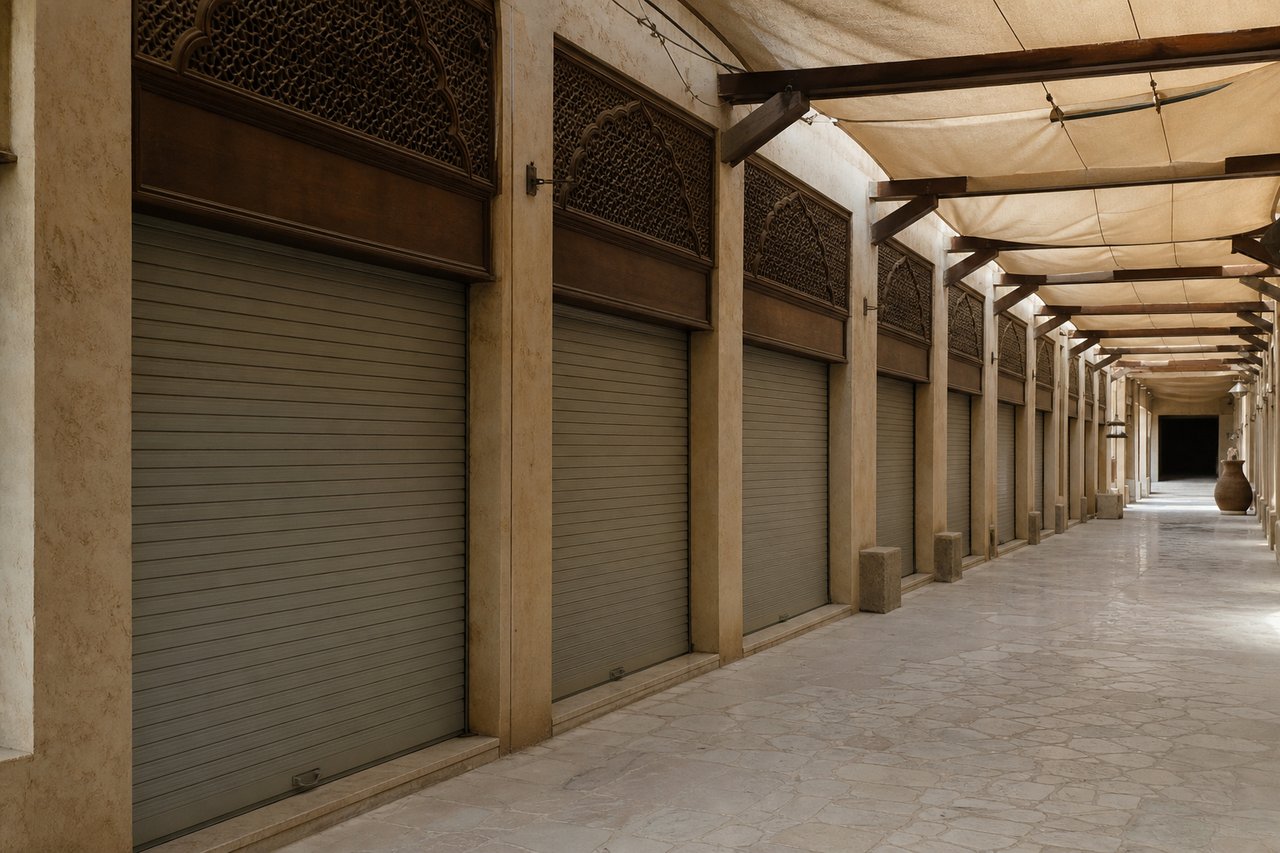
More than five hundred gold shops in Saudi Arabia closed following a labour ruling that restricted the employment of expatriate workers in the retail gold trade. The Chamber of Commerce reported the closures across the Kingdom's gold souks, and the immediate cause was not the metal price but a rule about who was permitted to stand behind the counter and work at the bench.
The Kingdom was one of the largest gold jewellery markets in the world, and its retail trade rested almost entirely on skilled expatriate goldsmiths, predominantly from South Asia. A nationalisation requirement applied to that trade removed, in effect, the workforce. A small workshop without a goldsmith is not a business that can be reorganised, only one that closes.
What the ruling did
The measure formed part of a broader programme to raise the share of Saudi nationals in private employment, applied sector by sector. In most sectors the practical effect was a hiring quota. In gold retail it was closer to a shutdown, for a reason specific to the trade: the skill involved is craft-based and acquired over years at the bench, so it cannot be transferred by a hiring policy on the timescale the rule allowed.
Two further features of the trade amplified it. The shops were overwhelmingly small owner-operated units rather than chains, so there was no corporate structure to absorb the change. And much of the value was in workmanship rather than in metal, meaning a shop that could not do the work had nothing distinctive left to sell.
Why this matters beyond Saudi Arabia
Retail closures of this scale in a market of this size are visible in world demand figures. Gulf jewellery demand was a substantial share of the total, and a large fraction of it flowed through exactly the kind of small souk workshop that closed. The dispatch is a useful record of a supply-side constraint on retail that had nothing to do with the metal market, a category that price commentary systematically misses.
It also illustrates a pattern that appears throughout this archive: physical gold markets are shaped by rules about people, borders and paperwork at least as much as by price. India's import duty did it through tariffs, China's exchanges through margin requirements, Saudi Arabia's souks through employment law. In each case the metal price was the same worldwide and the local market behaved completely differently.
The record
What the entry records is a local retail market contracting while the metal price behaved normally everywhere else, which is the kind of divergence a price series alone never shows. For the wider Gulf and Indian retail picture, see the gold section.
Questions about this dispatch
Why did Saudi gold shops close in 2012?
Because a labour-nationalisation ruling restricted the employment of expatriate workers in the retail gold trade, and the trade depended on skilled expatriate goldsmiths. More than five hundred shops closed. The metal price was not the cause. This was an employment measure whose effect on a craft-based retail sector was much larger than in the sectors it was modelled on.
Could Saudi nationals not have taken the jobs?
Not on the timescale the rule allowed. Goldsmithing is a craft skill acquired over years at the bench, so it cannot be substituted by a hiring quota the way a cashier or a driver can. That mismatch between the instrument and the trade it was applied to is what turned a nationalisation requirement into a wave of closures.
Did the closures affect world gold demand?
Gulf jewellery demand was a substantial share of the world total and a large part of it flowed through small souk workshops, so closures on this scale are visible in demand figures for the period. The dispatch is a record of a retail supply constraint rather than of a demand collapse. The buyers were still there; the shops able to serve them were not.
This page restores an item first published on 14 May 2012, 11:53 IST at the address below. Cite the publication date rather than the date you read it: the material is a 2011 to 2016 document, and the date is what makes it meaningful.
https://www.bullionstreet.com/news/more-than-500-gold-shops-closed-down-in-saudi-arabia/1802